


Canada in a Changing World
The relationship between Canada and the United States is being reset. During this time of uncertainty, The Conference Board of Canada is examining what Canada must do to not just survive but thrive in this changing world. We will look at what is required to expand our national security capabilities, build our economic resilience, address our domestic priorities, and reimagine how we engage with the rest of the world.
With multiple updates each week, check back here to stay up to date with our latest research and analysis.
Watch the Recording
Watch our Re-Investing in Canada: Strategies for Long-Term Prosperity webinar.
Expect in-depth discussion and analysis on …

Tariff Impacts
U.S. tariff policies are reshaping the economic landscape for Canadian industries, with consequences that vary across provinces. As trade with the U.S. becomes less predictable, Canada must look inward—reducing interprovincial trade barriers, strengthening domestic supply chains, and accelerating trade diversification efforts. How can federal and provincial policymakers work together to mitigate these risks and ensure economic resilience?

Geopolitical Partners and Trade Relationships
With global alliances in flux, Canada’s trade relationships are being redefined. While the U.S. remains a central partner, diversification efforts with Europe, the Indo-Pacific, and other economies are becoming increasingly critical. How should Canada adapt its trade strategy in the face of shifting global power dynamics?

National Security
Canada’s defense strategy is under increasing pressure as geopolitical tensions rise. With Arctic sovereignty challenged by global powers, Canada must make critical decisions about defense investments. How will Canada balance fiscal constraints with the need to assert sovereignty and meet evolving security commitments?

Strategic Industries
Canada’s position in key strategic sectors—critical minerals, artificial intelligence, clean energy, and advanced manufacturing—will determine its role in the global economy. As the U.S. and other nations accelerate industrial policies to gain competitive advantages, Canada must define its own path. What investments and policy shifts are required to secure leadership in these sectors?

How Much Does Canada’s Budget Move the Needle on Prosperity?
Canadian Economics November 26, 2025
Geopolitical tensions, trade wars and a change in posture from the United States have ushered in new thinking in Canada. The days of being a beneficiary of a reliable, transparent and predictable operating environment promised by U.S. leaderships looks to be behind us. Instead, the need for a self-determined destiny has taken national attention.
Commentary • 14-min read
Cory Renner, Richard Forbes
Research

Opportunity Amid Disruption: Supporting Canada’s Strategic Industries
Canadian Economics August 18, 2025
There are many challenges on the way to rebuilding Canada’s military. The first is fiscal, finding the required dollars will require hard choices. As well, potentially doubling or more the size of our military will create labour pressures in other industries. We will also need an industrial policy, to build up our domestic manufacturing capacity for a wide array of military products. And we don’t have the luxury of time to achieve these goals.
Commentary • 18-min read
CBoC Economics Team

Re-building our Military Will be Expensive, but Create Opportunities
Canadian Economics June 23, 2025
There are many challenges on the way to rebuilding Canada’s military. The first is fiscal, finding the required dollars will require hard choices. As well, potentially doubling or more the size of our military will create labour pressures in other industries. We will also need an industrial policy, to build up our domestic manufacturing capacity for a wide array of military products. And we don’t have the luxury of time to achieve these goals.
Commentary • 13-min read
Cory Renner

Trade Partner Profile: Middle East and North Africa
Canadian Economics June 12, 2025
In 2024, Canada exported approximately $10.4 billion CAD worth of products to the Middle East and North Africa (MENA) region, representing about 1 per cent of all Canadian exports. Imports from the region totaled $9.8 billion.
Commentary • 5-min read
CBoC Economics Team

U.S. Trade War Represents an $8.8 Billion Potential Gain for Canadian Tourism
Canadian Economics May 29, 2025
President Donald Trump’s administration has put Canada–U.S. relations on edge, and Canadians are finding ways to support local industry as much as possible. However, the U.S. government’s tariffs have focused on goods, leaving services trade largely ignored—and services are one spot where Canadians can hit back.
Commentary • 8-min read
Kiefer Van Mulligen

Trade Partner Profile: India
Canadian Economics May 21, 2025
In 2024, Canada exported $5 billion of goods to India and imported approximately $8 billion dollars worth. Indian imports of Canadian goods represent approximately 0.7 per cent of Canada’s goods exports, making India the tenth-largest buyer of Canadian products.
Commentary • 6-min read
Liam Daly
Trade Partner Profile: South America
Canadian Economics May 15, 2025
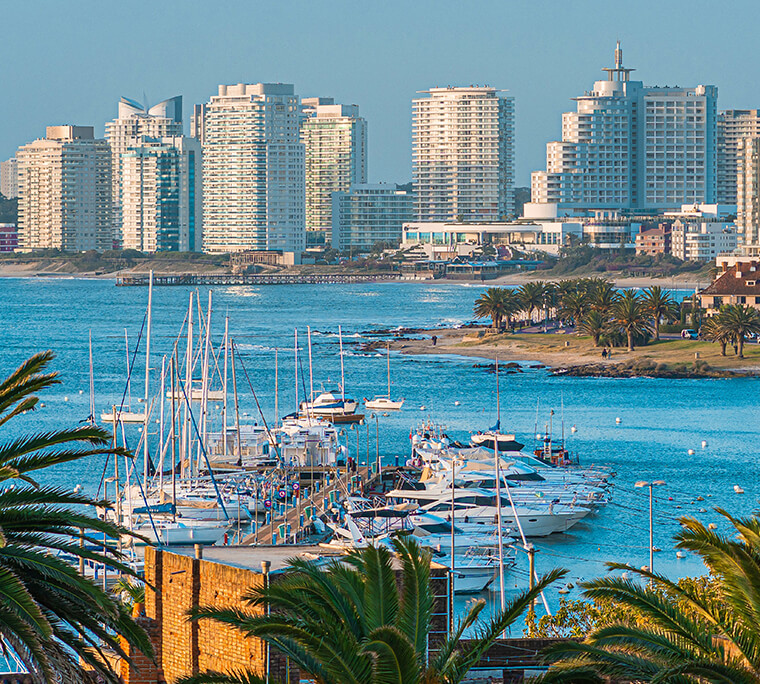
Canada exported $550 million worth of goods to Ecuador in 2024; a figure now poised to grow. Key exports to the country include wheat, refined oil, and dried vegetables. The trade agreement will considerably improve market access for many Canadian sectors, particularly manufacturing, forestry, and fishing.
Commentary • 2-min read
CBoC Economics Team

Trade Partner Profile: United Kingdom
Canadian Economics April 28, 2025
Trade has grown between the two countries over the last two decades. However, trade growth has been limited by the U.K.’s relatively weak growth compared to the global average in recent years, but the size of the country’s economy, and the historical relationship, provides a degree of upside.
Commentary • 3-min read
CBoC Economics Team

Middle Power Thinking: How Canada Needs to Engage with the World
Canadian Economics April 23, 2025
Global relationships are in upheaval as the United States is now engaging in coercive diplomacy with former allies. In short, the US is directly using its economic and military power to force changes in the behaviour of others. Few countries face the implications of this change more acutely than Canada, but we are not alone in the world.
Commentary • 15-min read
CBoC Economics Team

Canada in a Changing World: China
Canadian Economics April 22, 2025
In 2024, Canada exported $30 billion of products to China and imported $87 billion. China is Canada’s second largest trading partner, a long distance behind the United States. Canada’s trade deficit with China has increased steadily over the last two decades, swelling from $22 billion in 2005 to $57 billion in 2024.
Quick take • 3-min read
CBoC Economics Team
Events

Re-Investing in Canada: Strategies for Long-Term Prosperity
July 24, 2025
Canadians are confronting a new economic and geopolitical reality, one that calls for fresh thinking, bold investment, and a shared commitment to long-term prosperity. This free webinar will explore how renewed focus on industrial policy, resource development, and nation-building projects can reshape Canada’s economic future.
Webinar • 60-min listen

Canada’s Changing Geopolitical Landscape: Rethinking Global Partnerships
April 14, 2025
As the United States adopts a more coercive diplomatic approach, Canada must reassess its global alliances. This timely webinar will explore the impacts of ongoing tariffs and what Canada can do to succeed in this evolving global landscape.
Webinar • 60-min listen

Trump, Tariffs and Trade: Canada’s Near-Term Economic Outlook
February 24, 2025
In this webinar, our Chief Economist, Pedro Antunes, discusses the potential impacts of U.S. protectionist policies on consumer spending, business conditions and labour markets, as well as the Canadian policies that may mitigate their impacts.
Webinar • 70-min listen

Centre for Canadian Growth and Prosperity
Through rigorous analysis and evidence-based insights, this Centre provides the knowledge required to shape policies and practices that will secure a strong, resilient, and inclusive future for all Canadians.