


Taking Advice: Saving for the Future

Some Canadians are not saving enough for retirement.
As Canada’s baby-boomer generation migrates out of the labour force, a significant share of retirees will see their standard of living decline dramatically.
Financial advice can help people prepare for retirement by increasing their savings rate. Those who have a financial advisor are more disciplined in their savings behaviour.
Let’s look at two examples.

Betty
Begin saving: 2020
Income: $48,000/year
Age: 25
Retirement age: 65

Betty starts a relationship with a financial advisor

Andrew
Begin saving: 2020
Income: $48,000/year
Age: 25
Retirement age: 65
Andrew does not
Savings Rates
(per cent)
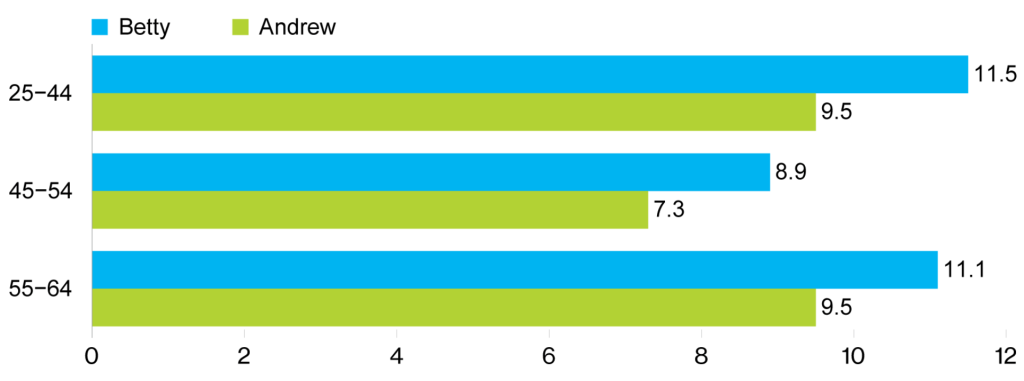
Sources: The Conference Board of Canada; CIRANO.
Betty saved 55% more than Andrew thanks to the advice she received from a financial advisor.
A lifetime of savings
(C$)
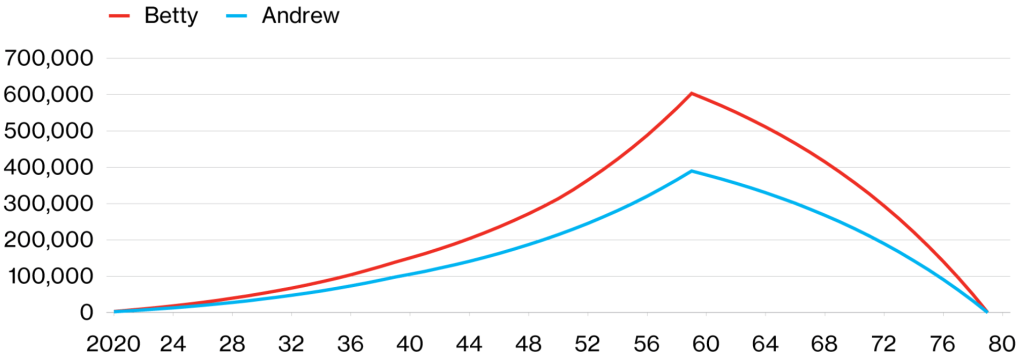
Sources: The Conference Board of Canada; CIRANO; Statistics Canada.
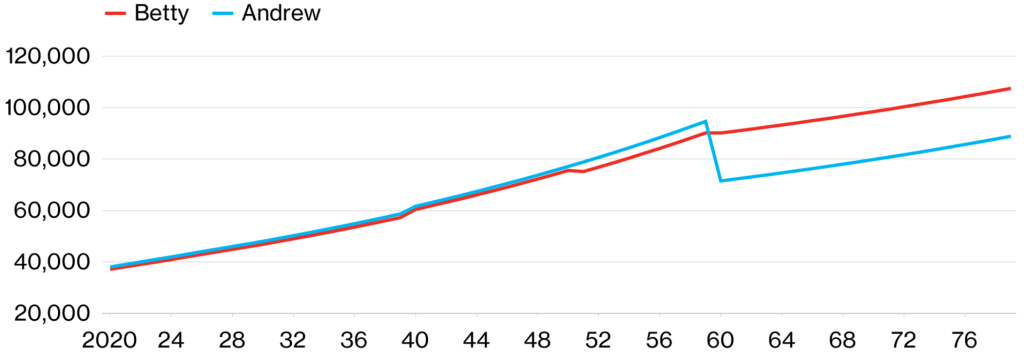
Financial advice means retirement spending can be closer to pre-retirement spending
(C$)

Starting later in life is still worth it.
Saving early in life compared with starting later
(C$)
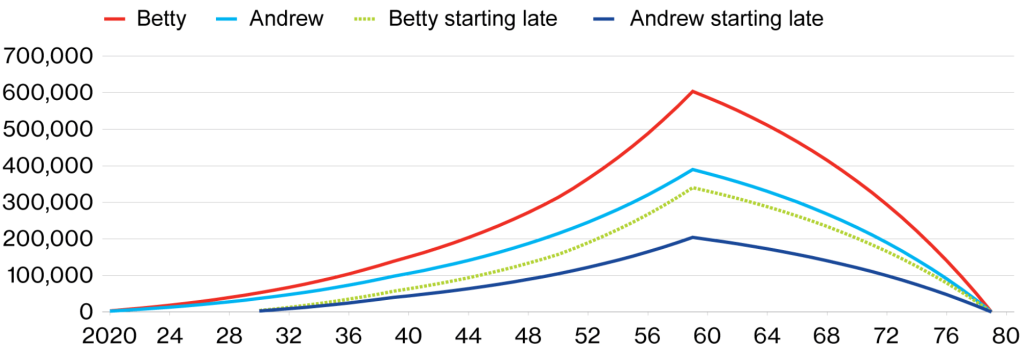
Sources: The Conference Board of Canada; CIRANO; Statistics Canada.

Good for the individual.
Good for the economy …

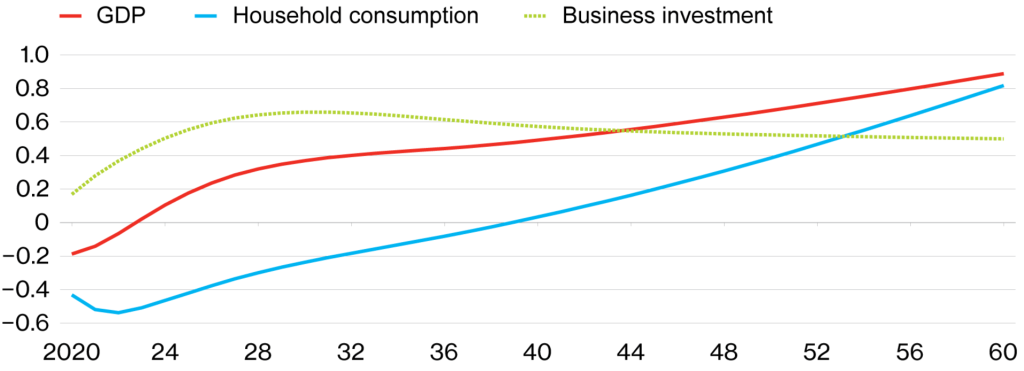
By working with a financial advisor, you increase your savings, helping the overall economy
- Canadian businesses receive more investment.
- The Canadian economy gets a boost.
If we had 10% more Bettys, Canada would see some definite perks. Despite a slight dip in household consumption in the first few years, by 2060:
- $900-million boost to GDP
- $500-million rise in business investment
- $7-billion increase in tax revenues

Expected impacts if more people start a relationship with a financial advisor
(difference in $ billions)
Source: The Conference Board of Canada.

Financial advice is crucial to boosting savings. And saving for retirement involves making small changes that add up to a big impact over time. Your personal savings can have a similar effect on the national economy.