


Canada’s AI Economy
Canada stands at a pivotal juncture.
While AI capabilities are advancing rapidly, adoption remains uneven across sectors. This new series of research provides timely, evidence-based insights to help policy-makers, business leaders, and institutions align AI investments with Canada’s strategic strengths—labour, natural resources, and advanced industrial capacity.
The Conference Board of Canada, in collaboration with Microsoft Canada, is releasing three briefings to explore the transformative role of artificial intelligence in critical areas of national interest: the overall economy, agriculture, and manufacturing.
Each briefing provides sector-specific analysis, adoption trends, and policy considerations to support inclusive, productivity-enhancing AI transitions across the country.
Briefings

Briefing 1
Canada’s AI Economy: An Overview
May 15, 2025 • Issue briefing • 8-min read
Canada is well-positioned to lead global AI growth—but this leadership hinges on broad-based adoption, not just excellence in research. With a 30 per cent growth in the AI workforce over five years and a top-tier global research profile, Canada has the assets to strengthen its competitive edge.
The findings are clear:
- AI adoption could increase Canada’s labour productivity by 17.1 per cent over the next 20 years.
- Generative AI alone is projected to contribute $185 billion annually to the Canadian economy by 2030.
- Canada ranks second in AI research output per capita among G7 nations, reinforcing its leadership in innovation.
This briefing sets the foundation for how AI can shape Canada’s competitiveness, innovation agenda, and future workforce—positioning the country to thrive in a rapidly evolving global landscape.

Briefing 2
Harvesting AI’s Potential
September 17, 2025 • Issue briefing • 9-min read
Canada is a global agricultural powerhouse, supported by vast arable land, abundant fresh water, and advanced agri-food supply chains. In May 2025 alone, agriculture contributed over $31.8 billion to the national GDP—a 1.4 per cent increase from the same period last year. In 2022, export values exceeded $30.5 billion, underscoring the sector’s global reach. Canadian farms already punch above their weight, but maintaining this strong position will require continued adaptation and innovation.
This briefing explores how AI can transform agriculture amid rising pressures:
- Labour force decline has made automation and AI essential to sustaining productivity.
- Growing public investment has created new opportunities to pilot AI solutions on farms.
AI can help Canada shift from selective technology use to integrated, data-driven agriculture—optimizing inputs, reducing waste, and ensuring long-term viability in the face of climate variability and resource constraints. Saskatchewan, Alberta, and Ontario—responsible for over half of national production—are key sites for scaling AI-enabled innovation.
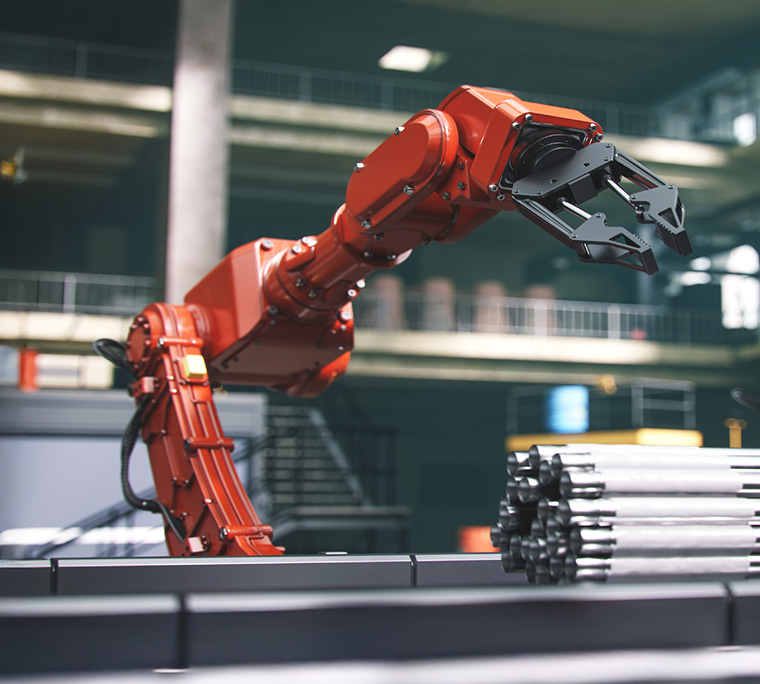
Briefing 3
Modernizing Canadian Manufacturing With AI
September 17, 2025 • Issue briefing • 5-min read
Manufacturing is a critical sector of Canada’s economy, employing over 1.5 million workers—nearly half of all goods-producing sector jobs in 2024. Despite its importance, the sector faces declining output as its share in national GDP dropped from 10.6 per cent in 2015 to 9.2 per cent in 2024.
This briefing outlines the structural and economic imperative for AI integration in Canadian manufacturing:
- Only 13.1 per cent of manufacturers have adopted AI, leaving the sector exposed to global competitive pressures.
- However, manufacturing firms demonstrate strong potential for AI uptake, with manufacturers actively taking steps to overcome adoption barriers.
Targeted AI investments can reinforce key regional manufacturing strengths, particularly in advanced automotive and aerospace sectors in Ontario and Quebec, enabling Canada to better compete in a shifting global landscape.